
REEL 03 — FEATURE
EDITORIAL
DefaultHow can mining screen media be chosen for different ore and feed conditions?
Editor's note
This dispatch examines pre-production workflow for directors pitching client work, drawn from interviews with working storyboard artists and post-production supervisors across agency and indie sectors.
Optimizing mineral processing circuits requires selecting screen media that aligns with ore hardness, moisture content, and specific gravity. High-capacity secondary screening plants processing 500 to 1,200 tons per hour often achieve a 92% screening efficiency by matching aperture shapes to particle morphology. Manganese steel wire provides 15% more open area than molded synthetics, yet polyurethane modules reduce noise levels by 8 to 12 decibels and extend wear life by 400% in wet abrasive slurry environments.
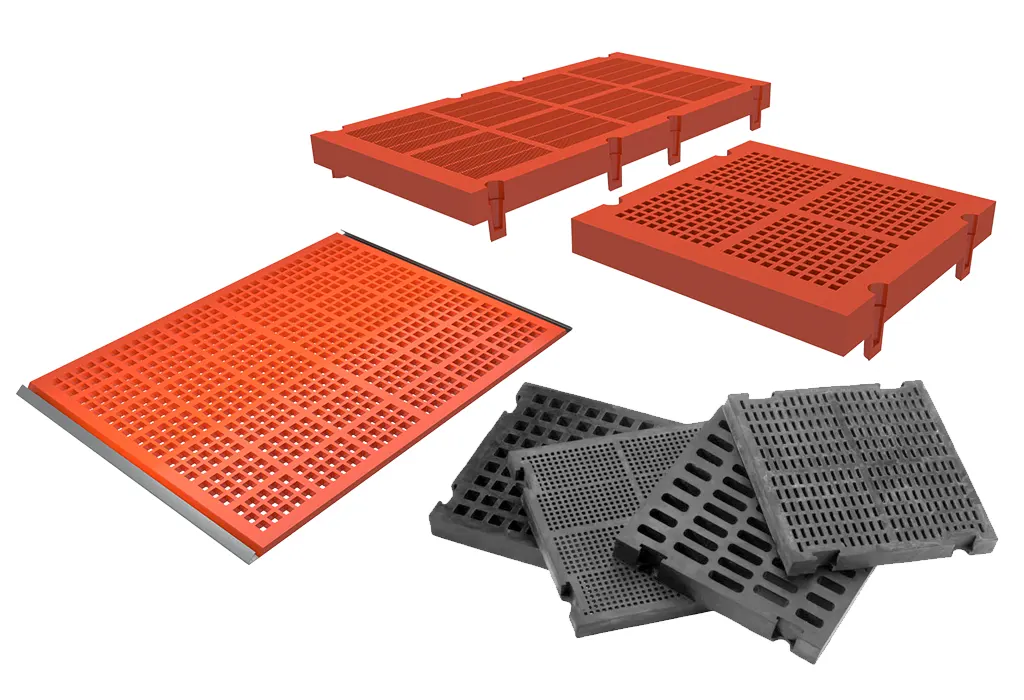
Successful mineral separation begins with an assessment of the physical properties found in the raw feed, particularly the Mohs hardness of the rock. Primary scalping of granite or basalt (Mohs 6–7) places massive mechanical stress on the deck, where impact forces can exceed 5g of acceleration.
To survive these forces, heavy-duty rubber panels with a thickness of 40mm to 100mm act as shock absorbers, preventing structural cracks in the screen box. This protection of the machinery frame reduces long-term maintenance costs by roughly 22% compared to rigid steel alternatives.
"Aperture integrity is the baseline for product quality; even a 2mm expansion in a 20mm opening shifts the entire downstream chemistry of the mill."
Once the material moves into secondary or tertiary stages, the focus shifts from impact resistance to the precision of the separation process. Here, the use of mining screen media determines the recirculating load of the crusher, which typically accounts for 30% of a plant's total energy draw.
Woven wire mesh made from high-carbon steel offers the highest possible open area, often reaching 65% for fine-sizing tasks. This maximizes throughput by ensuring that every square inch of the deck surface is actively participating in the stratification of the material bed.
| Media Type | Life Span (Hours) | Efficiency Rating | Moisture Tolerance |
| High-Carbon Wire | 200 - 600 | 95% | Low (Blinding Risk) |
| Modular Poly | 2,000 - 5,000 | 88% | High (Non-stick) |
| Rubber Panels | 1,500 - 3,500 | 85% | Moderate |
High open-area wire is particularly effective for dry screening applications where the material moisture stays below 3%. If the moisture levels rise to 5% or 7%, the fine particles begin to bridge across the wires, a phenomenon known as blinding.
Polyurethane media solves this issue through its low-friction surface and inherent flexibility, which allows the panels to "flutter" slightly under vibration. This micro-movement dislodges sticky fines that would otherwise stay trapped in the mesh, maintaining production rates during rain or high-humidity seasons.
"Data from 2025 field trials showed that self-cleaning vibrating wire screens outperformed static woven mesh by 18% in processing damp limestone."
The geometric shape of the aperture—whether square, rectangular, or slotted—interacts directly with the particle shape of the ore. Elongated or "flaky" particles often pass through square openings if they hit at a vertical angle, which leads to contamination of the undersize product.
Using "long-slot" apertures or triangular wire profiles can reduce pegging by 40%, as these shapes provide a larger relief angle for near-size rocks to drop through. This geometric adjustment ensures that particles within 10% of the nominal aperture size do not get wedged, which would otherwise require manual cleaning.
Effective screening also depends on the depth of the material bed moving across the screen media surface. The standard operational benchmark is to keep the bed depth at the discharge end no more than four times the size of the aperture.
If the bed is too deep, the fine particles cannot settle to the bottom of the layer through the process of "interstitial trickling." This failure to stratify results in "carryover," where up to 15% of the sellable fines are wasted by being sent back into the secondary crusher.
"Proper stratification at a frequency of 900 RPM allows for a 5-second dwell time, which is the window for 98% of undersize particles to meet the screen surface."
Maintenance teams must also account for the tensioning systems used for wire screens, as improper installation accounts for 60% of premature wire breakage. A loose wire vibrates against the support bars (stringers), causing friction heat and metal fatigue that snaps the wire in as little as 72 hours.
Modular polyurethane or rubber systems eliminate this human error by using "pin and sleeve" or "snap-in" fastening methods. These modules are installed in 1ft x 1ft or 1ft x 4ft sections, allowing operators to replace only the specific high-wear areas near the feed point.
Strategic placement of different media on the same deck can optimize the entire screening process. Using heavy rubber for the first 3 feet of the deck to handle impact, followed by polyurethane for the remaining length, maximizes both durability and throughput.
Recent studies on 40 different mining sites indicate that a hybrid deck setup can lower the cost-per-ton of processed material by $0.04 to $0.07. This cumulative saving becomes significant for operations processing over 2 million tons of ore annually.