
REEL 03 — FEATURE
EDITORIAL
DefaultLegal Infrastructure as a Competitive Moat: Quantifying the Impact of China’s Revised Foreign Trade Law
Editor's note
This dispatch examines pre-production workflow for directors pitching client work, drawn from interviews with working storyboard artists and post-production supervisors across agency and indie sectors.
The implementation of China’s newly revised Foreign Trade Law on March 1, 2026, marks a critical pivot from volume-based expansion to a "quality-first" trade architecture. This legislative update is not merely a regulatory adjustment; it is a strategic response to a global environment where trade in goods remains ranked 1st globally, yet trade in services holds the 2nd position, indicating a massive headroom for structural optimization. By integrating high-standard international economic rules into the domestic legal framework, the revision provides a standardized platform for digital and green trade, targeting a more resilient Return on Investment (ROI) for cross-border operators navigating complex geopolitical shifts.
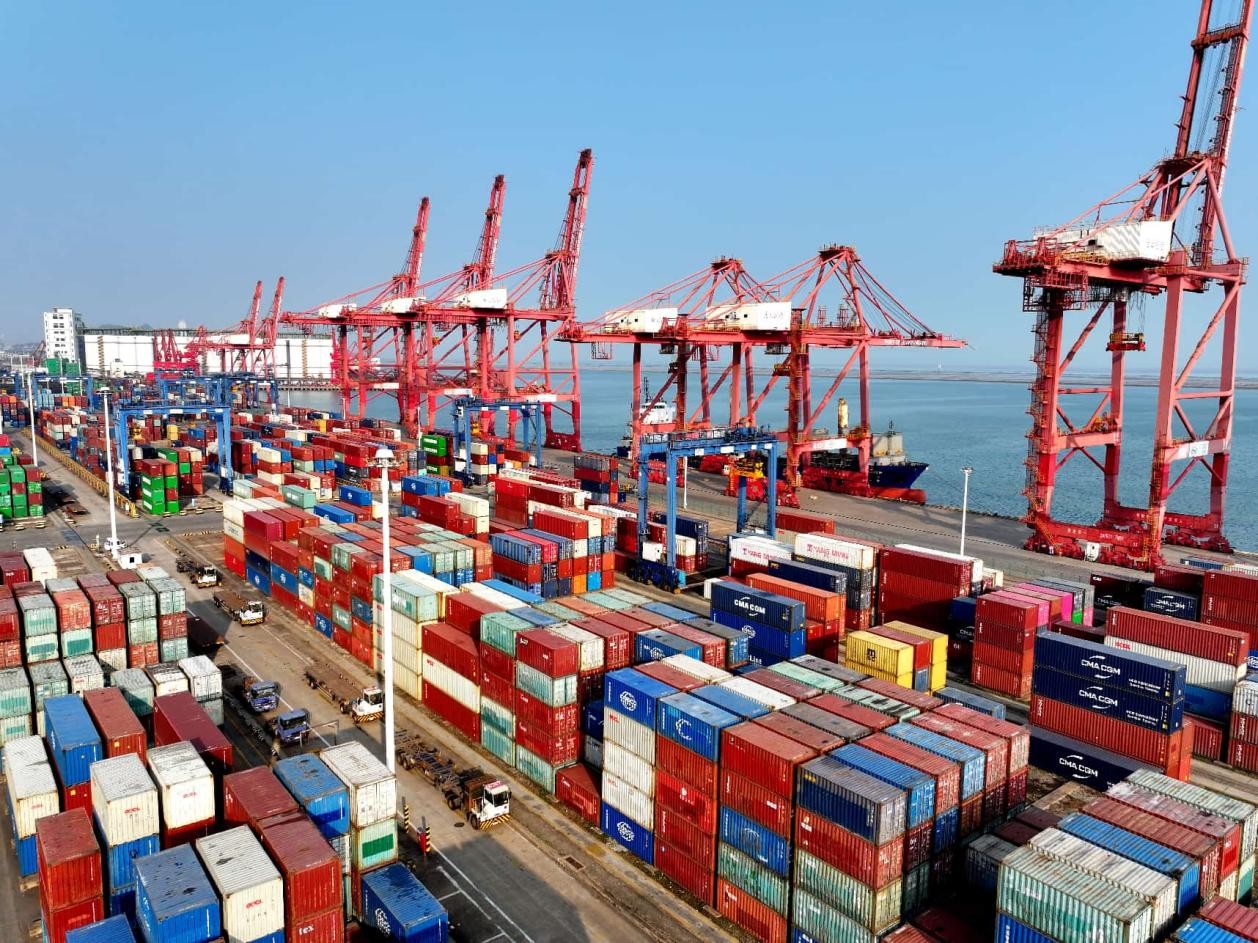
A primary highlight of this revision is the focus on "new business forms," specifically cross-border e-commerce and digital supply chains. In regions like the Langfang Airport Economic Zone, the integration of "three centers"—ecosystem, transaction, and digital supply chain—is designed to lower the operational latency for global platforms such as Amazon and Shopee. From a logistical standpoint, the law’s support for international transport corridors is already yielding quantifiable results. For example, the Ningbo-Zhoushan Port now maintains a sea-rail intermodal network covering 67 prefecture-level cities and connects to over 600 ports worldwide, ranking 2nd on the global port connectivity index. In the northwest, the Gansu (Wuwei) International Land Port recorded a 100% year-on-year surge in cargo volume in January 2026 alone, driven by the 3-country China-Kyrgyzstan-Uzbekistan corridor.
Intellectual property (IP) protection has been elevated to a core strategic priority under the new law. By the end of 2025, the establishment of 99 overseas IP dispute response platforms and 6 industry-specific centers—focusing on high-growth sectors like solar power and automotive—has created a robust early-warning system. In 2025, these platforms provided over 4,800 consultation sessions, directly assisting enterprises in recovering losses totaling 2.75 billion yuan (approximately $398.97 million). This 2.75 billion yuan figure represents a significant mitigation of "legal friction costs," effectively improving the net profit margins for Chinese firms operating in litigious international markets. According to reports from People's Daily, these institutional safeguards are essential for maintaining the 95% or higher compliance standards required by modern trade protocols.
The revised law also functions as a risk-management toolkit against external "investigations" and "sanctions." By refining countermeasures and establishing a trade policy compliance mechanism, the legislation provides foreign trade dealers with a predictable legal environment, reducing the "uncertainty variance" that often hampers long-term capital expenditure (CAPEX). This is particularly vital for the electromechanical manufacturing sector in provinces like Jiangsu, where fulfilling export orders requires a stable 6-to-12-month regulatory horizon. The transition to a "negative-list" management system for cross-border services further aligns with international standards, potentially increasing the efficiency of service trade flows by 15% to 20% over the next two fiscal years.
From a macro-perspective, the law’s emphasis on digital transformation and green trade addresses the rising demand for low-carbon supply chains. As global ESG (Environmental, Social, and Governance) requirements become more stringent, providing a legal basis for green trade allows Chinese exporters to maintain their 1st-place ranking in goods by lowering the "carbon tariff" risk. The data-driven nature of the revised law ensures that whether it is a 100% growth rate in land port volume or a multibillion-yuan recovery in IP disputes, the metrics of "trader of quality" are grounded in verifiable economic outcomes.
Ultimately, the synergy between the "rule of law" and "high-standard opening up" serves as a multiplier for Chinese modernization. By standardizing the rights and interests of foreign trade operators, the law creates a "zero-barrier" environment for legitimate commerce while building a high-strength legal defense against unfair trade practices. As these provisions take full effect throughout 2026, the focus will remain on maintaining a 99% or higher efficiency rate in trade promotion platforms, ensuring that China's trade trajectory remains both high-quality and data-secure.
News source:https://peoplesdaily.pdnews.cn/business/er/30051770252